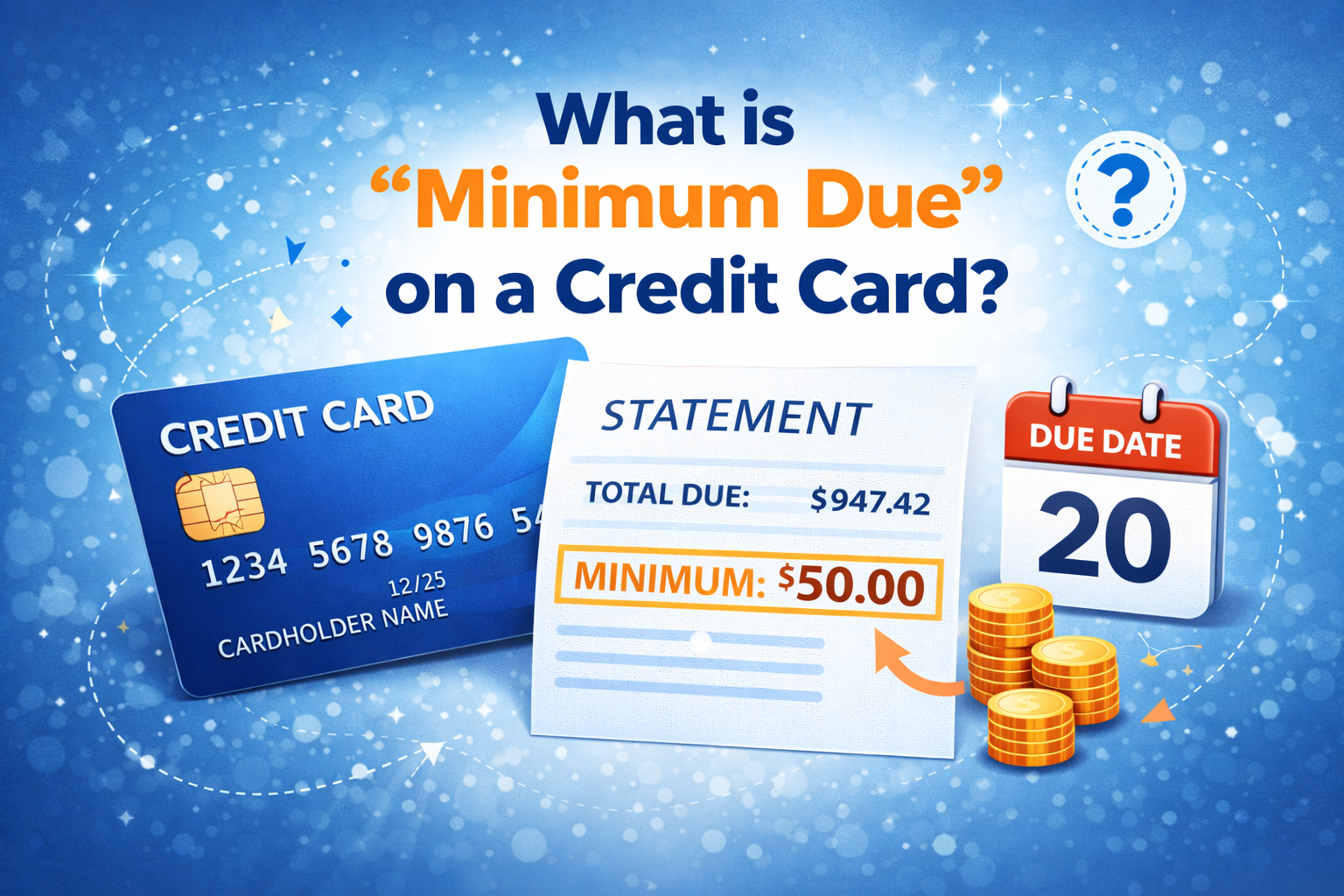
A credit card is a financial tool that lets you borrow money from a bank to make purchases and pay later. providing a faster and more user-friendly experience that lets you spend money on credit, meaning you pay later, not immediately.
Think of it as a short-term loan that you can access instantly at the checkout counter. Instead of using your own money (like a debit card), you borrow from the bank within a fixed limit, and repay it later.
📌 How Does a Credit Card Work?
Let’s practically understand this step-by-step.
1. You Make a Purchase
You use your credit card for shopping, bills, travel, or online payments.
👉 Example:
You buy groceries worth ₹5,000 using a card from Axis Bank
2. Bank Pays for You
The bank immediately pays the merchant on your behalf.
👉 You now owe ₹5,000 to the bank.
3. Transactions Are Recorded
All your spending is tracked in a billing cycle (usually 30 days).
4. Bill is Generated
At the end of the cycle, the bank sends a statement with:
- Total amount spent
- Minimum amount due
- Payment due date
5. You Repay the Amount
You have two choices:
- Pay full amount → No interest ✅
- Pay minimum due → Interest is charged ❌
💎 Real-Life Example
Suppose:
- You spend ₹20,000 on a credit card from HDFC Bank
- Billing date: 30th
- Due date: 20th next month
👉 If you pay ₹20,000 before 20th → Zero interest
👉 If you pay only ₹2,000 → Interest applies on ₹18,000
In my opinion, this is where many users go wrong—they think minimum payment is enough, but it actually leads to high interest.
📊 Key Elements You Should Know
|
|
|
|
|
|
|
|
|
|
|
|
|
|
|
|
|
|
💡 Interest-Free Period (Important Concept)
Credit cards usually offer up to 45 days of interest-free credit.
👉 This means:
- You can use the money now
- Pay later without extra cost
🟢 Here’s a simple hack:
Make purchases right after your billing date to get maximum free time to repay.
📢In my opinion:
A credit card is extremely useful—but only if you treat it like a debit card and spend within your limits